

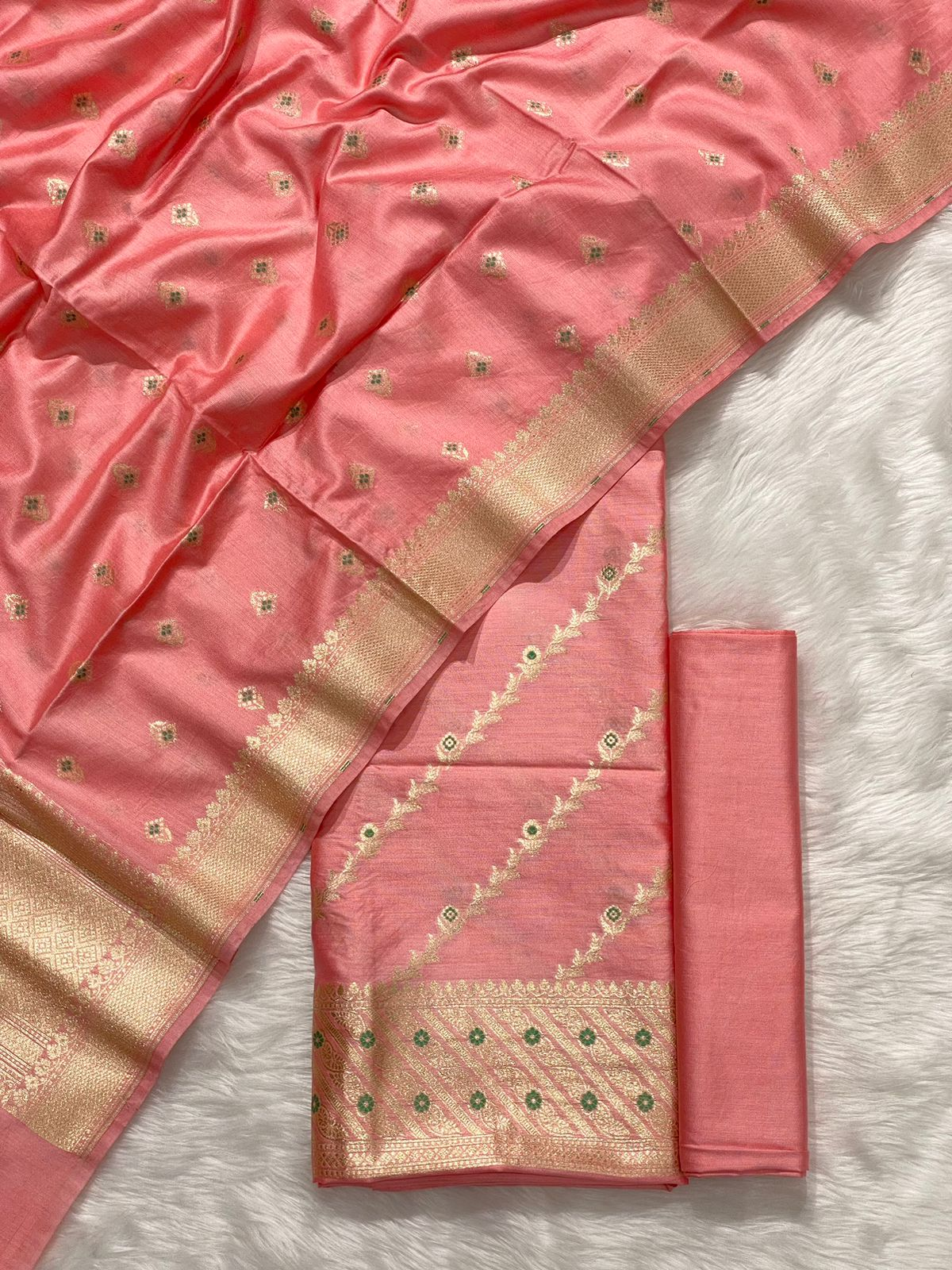
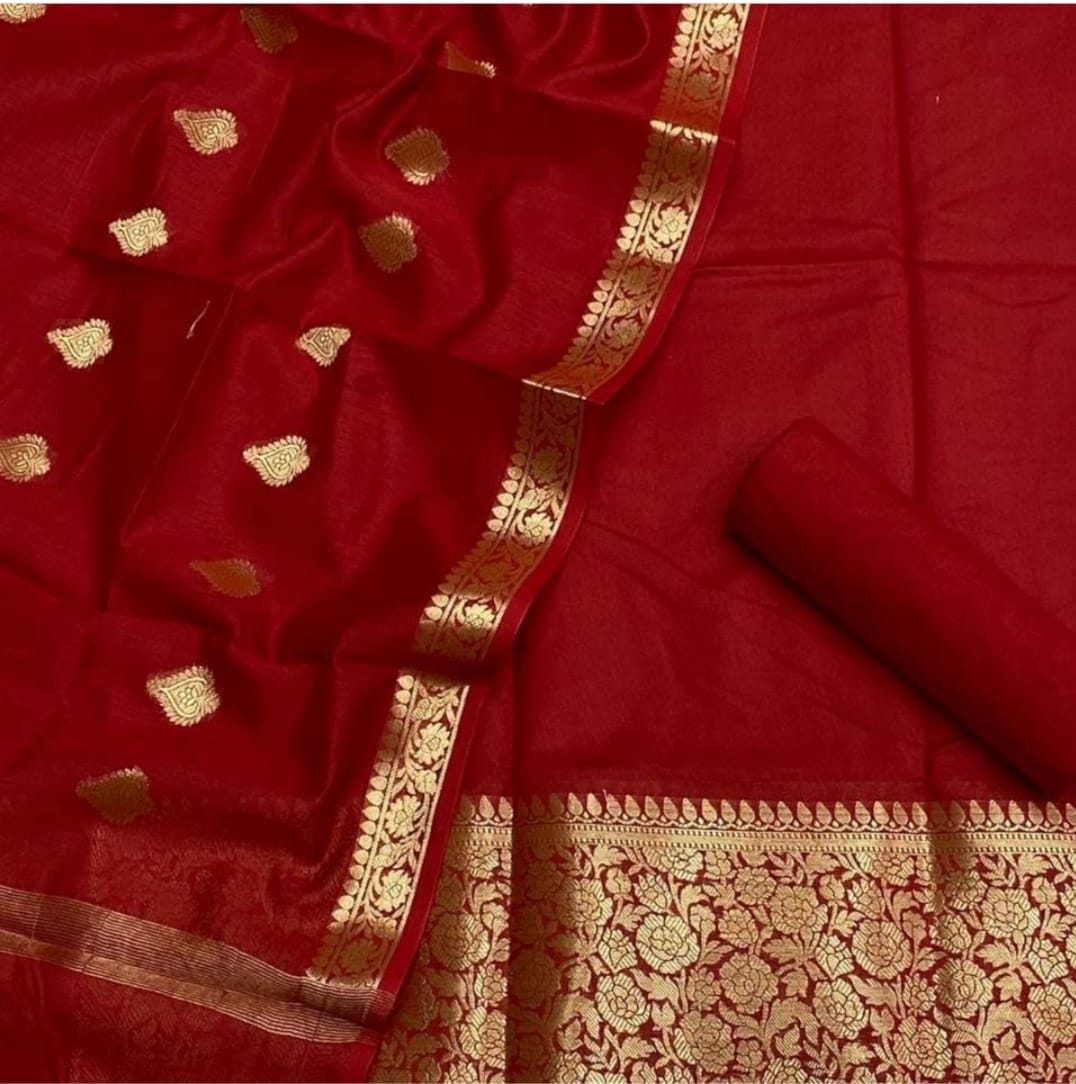
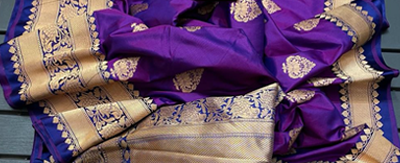

Most people first encounter Banarasi not in a store, but at a wedding or a family function. It stands out without trying too hard, with its rich silk, intricate zari, and patterns that feel familiar yet detailed.
What makes it special isn’t just how it looks, but where it comes from. A Banarasi suit carries a history of weaving that goes back centuries, shaped by artisans who have perfected this craft over generations.
Where It All Began: Threads of Royalty
The story of Banarasi begins in the ancient city of Varanasi, a place where tradition and craftsmanship have lived side by side for generations. This textile art flourished during the Mughal era, when Persian aesthetics blended beautifully with Indian weaving techniques to create fabrics that were rich, detailed, and deeply symbolic.
Silk became the foundation, while gold and silver zari added a layer of opulence that made these textiles a symbol of status and refinement. Originally, Banarasi weaves were reserved for royalty and grand occasions, worn in courts and ceremonies where every detail mattered.
What set them apart was not just their beauty, but the intention behind them. Each motif, whether inspired by Mughal gardens, florals, or intricate jaal patterns, was thoughtfully designed to reflect culture, nature, and artistry.

The Art of Weaving: Craft That Takes Its Time
The making of a Banarasi suit is a process that cannot be rushed. It requires patience, precision, and a deep understanding of technique passed down through generations of artisans.
From preparing the silk threads to setting up the loom and carefully weaving zari into the fabric, every step is done with attention to detail. A single piece can take days or even weeks to complete, depending on the complexity of the design.
This slow, deliberate process is what gives Banarasi its depth and richness. It is not just about how the fabric looks, but how it is made and the human effort that goes into every inch of it.

The Evolution: From Sarees to Contemporary Suits
For a long time, Banarasi was most closely associated with sarees, especially in weddings and traditional celebrations. Over time, however, fashion evolved, and so did the way Banarasi was worn.
The Banarasi suit emerged as a natural extension of this heritage. It retained the richness of the original weave while adapting to more versatile and contemporary silhouettes. This shift made it easier for women to incorporate Banarasi into different occasions beyond weddings.
Today, Banarasi suits are worn at festive gatherings, family functions, and even modern celebrations where tradition meets personal style. They offer the same elegance, but with a comfort and flexibility that suits today’s lifestyle.

The Many Faces of Banarasi
One of the most fascinating aspects of Banarasi is its variety. Different types of weaves and fabrics give each piece a distinct character.
Katan silk is known for its smooth texture and luxurious finish, making it ideal for grand occasions. Organza, or Kora, offers a lighter feel with a subtle sheen that feels refined and delicate. Georgette Banarasi brings fluidity and ease, making it a popular choice for those who want tradition with comfort. Shattir, on the other hand, represents a more experimental side of Banarasi, with contemporary patterns and evolving designs.
These variations show how Banarasi continues to adapt while staying rooted in its identity.
Banarasi Today: Where Heritage Meets Modern Style
In today’s fashion landscape, Banarasi has found a place that goes beyond tradition. Designers reinterpret it in new forms, and women choose it not just for cultural significance but for its timeless appeal.
It works across occasions, blending seamlessly into both traditional and modern wardrobes. Whether styled minimally or paired with statement elements, Banarasi retains its distinct charm without trying too hard.
Its strength lies in this balance. It carries history, yet feels relevant. It reflects tradition, yet allows individuality.
Fabpersona: Carrying the Legacy Forward
At Fabpersona, Banarasi is approached with a deep respect for its heritage and craftsmanship. Each suit is thoughtfully curated to ensure that it reflects not just design, but the story and skill behind it.
The focus is on bringing authentic weaves to a modern audience without losing the essence that makes Banarasi special. It is about making tradition accessible, wearable, and meaningful in today’s context.
Why Banarasi Still Matters
In a time when fashion is often fast and disposable, Banarasi stands apart. It encourages a different way of looking at clothing, one that values craftsmanship, detail, and cultural depth.
A Banarasi suit is not just something you wear for an occasion. It becomes part of your personal story, something that can be remembered, revisited, and even passed on.
That is what makes it timeless. It is not just about fabric or design, but about continuity, tradition, and the quiet beauty of something made with care.